
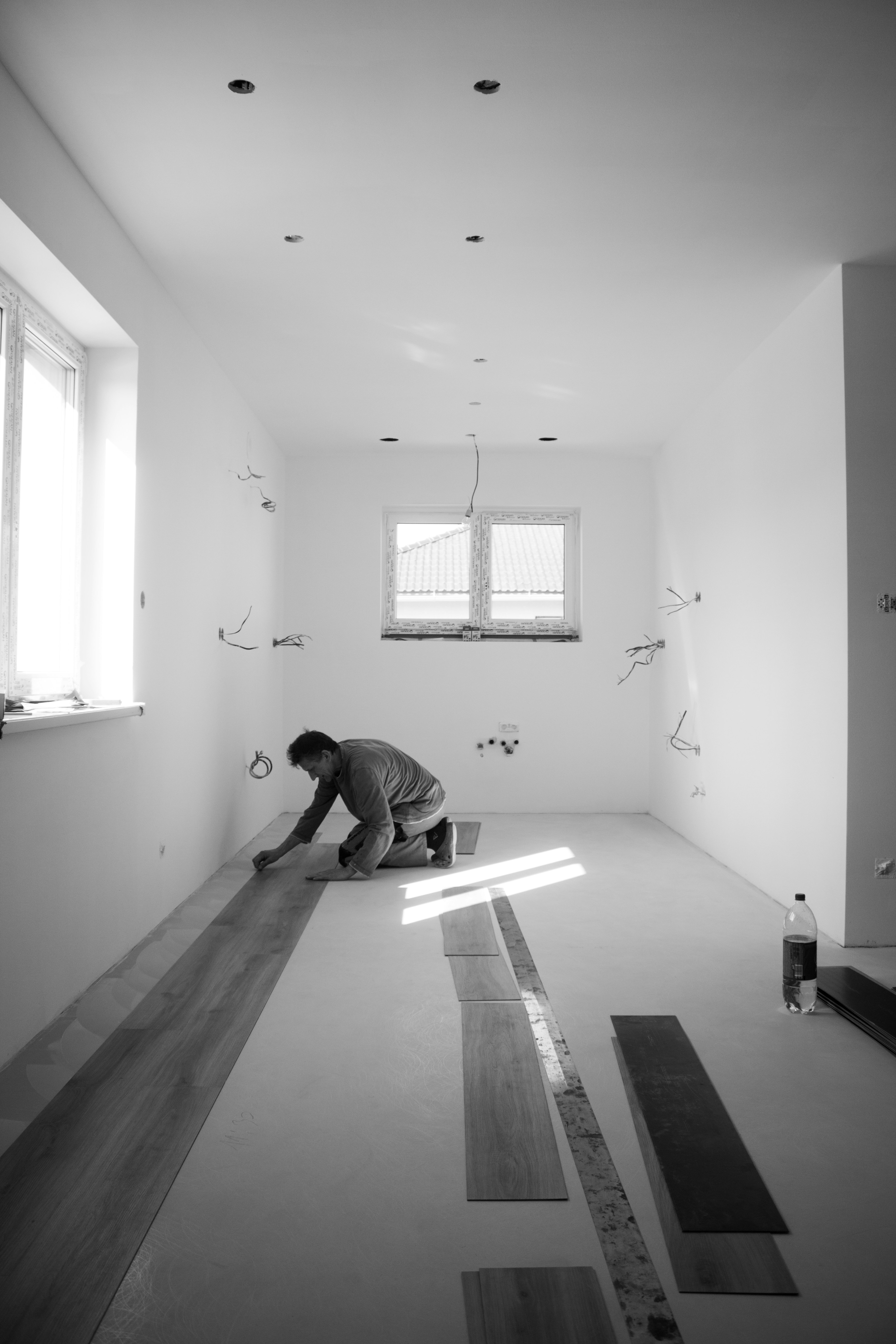
An unfinished room with exposed wiring and flooring panels laid out: conditions to check before new finishes go down.
Home / Renovation Guides / What’s Underneath
Most renovation conversations start with the finish: the tile, the colour, the vanity. That’s natural, because it’s the part you’ll look at every day. But in my experience, one of the biggest renovation mistakes is choosing the finish before anyone has properly assessed what’s underneath it.
I’m Ivan Bodnar, an independent home renovation specialist in Melbourne with about 15 years of hands-on residential experience. Here’s why I look before I quote.
A new tile, a fresh coat of paint or a new floor covering sits on whatever is already there. If the surface below is loose, uneven, cracked or affected by moisture, the new finish has to live with that problem. Sometimes it hides it for a while. Sometimes it makes it easier to see.
That’s why a cracked tile or a bubbling patch of paint is a question, not just a job. It might be a one-off. It might also be the visible sign of something that needs attention first. The only way to give you a straight answer is to look properly.
On a site visit I work from the outside in. These are the general questions behind every assessment, whether it’s a bathroom, kitchen, laundry or a single wall.
01 THE VISIBLE SURFACE
Cracks, drummy or loose tiles, worn grout, flaking paint, gaps and uneven sections. Where the damage sits often says more than how bad it looks.
02 WHAT IT’S FIXED TO
Whether the wall, floor or substrate underneath looks sound, level and able to take a new finish, or whether it needs repair first.
03 SIGNS OF MOISTURE
Staining, swelling, soft spots or a musty smell, especially in wet areas. These change the conversation and are worth raising early.
04 WHO ELSE MAY BE NEEDED
Whether pipes, wiring or other regulated work are involved, so the right licensed specialists can be planned in from the start.
Once I’ve seen the condition, I explain what I found and the options that make sense. Sometimes a targeted repair is reasonable. Sometimes it’s better to go back further before new finishes go on. I’ll tell you which I’d recommend and why, and I’ll mention the possible difficulties too, not just the easy parts.
The right solution, the estimated cost and the timeframe all depend on your property’s condition and the work it needs. That’s why I don’t put numbers on a job I haven’t seen. The site visit and quote are free, and the decision stays with you.
Read more about how the free quote and site assessment works.

A tape measure: measuring and planning the options before quoting.
Checking what’s underneath sometimes means finding plumbing or electrical work that needs attention. I don’t do licensed plumbing or electrical work myself. Where a renovation needs it, I work with appropriately licensed specialists, and if building work is regulated, the applicable permit, registration and insurance requirements need to be assessed before it goes ahead.
I also don’t offer a 24-hour emergency plumbing, electrical or gas service. See how working with licensed specialists fits into a renovation.
☐ Note where the damage is, not just what it looks like.
☐ Take a few photos, including close-ups and the wider room.
☐ Mention any leaks, damp smells or soft spots you’ve noticed.
☐ Hold off on buying tiles or fittings until the condition is known.
Related reading: My Tiles Are Cracked. What Now? · How to Send a Useful Renovation Enquiry · Bathroom Renovations in Melbourne · Wall and Floor Tiling
If you’re in Melbourne or the surrounding suburbs and something needs a proper look, send me an enquiry for a free quote or call or text 0413 142 055.