
Interior finishing is the part of a home you see and touch every day: the walls, ceilings, floors and paint that make a room feel finished. I’m Ivan Bodnar, an independent sole trader and home renovation specialist based in Melbourne, with about 15 years of hands-on experience in residential renovations.
I take on plasterboard installation and plastering, tiling, flooring and interior painting. That can be one stage of a larger renovation or a home improvement in its own right, anywhere in Melbourne and the surrounding suburbs.
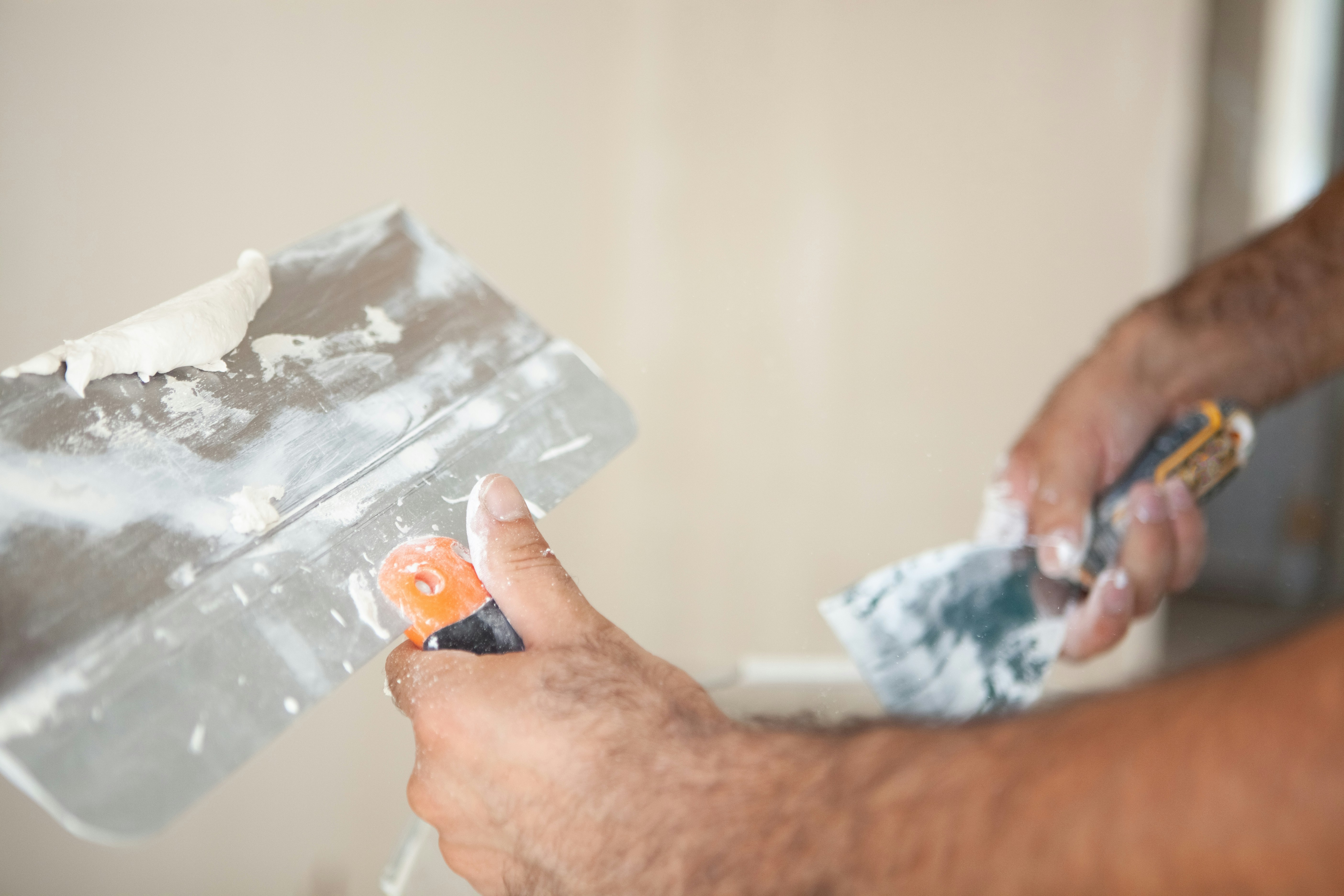
Joint compound being smoothed with a wide trowel. A finish is only as good as the surface underneath it.
Each layer of finishing depends on the one before it, so the order can change from room to room. As a rough guide, this is how the work usually runs.
1
Before we talk colours or floor coverings, I look at what the finish will sit on: cracked plaster, damp marks, uneven floors, tiles that sound hollow. Why I check underneath first.
2
Installing plasterboard, patching damaged areas, setting joints and sanding until the surface is ready for paint or tiles. See plastering.
3
4
Filling, sanding and priming, then the finishing coats. Most of the result comes from the preparation. See painting.
These are the decisions I talk through with clients during a site visit. I’ll give you straightforward advice, explain the options and point out any likely difficulties before you commit to a finish.
The right solution, estimated cost and timeframe always depend on the condition of the property and the work involved.
CONDITION: CRACKED OR DAMAGED WALL
Small dents and hairline cracks can often be patched and set. Where plasterboard is soft, water-stained or badly damaged, replacing that section is usually the more practical choice. The stain may also be a sign of a problem that needs fixing first.
CONDITION: TIRED OR FLAKING PAINT
Fresh paint shows every flaw beneath it. Flaking areas need scraping back, and patches need filling and priming. That preparation often takes longer than the final coats.
CONDITION: UNEVEN OR WORN FLOOR
A new floor laid over an uneven base will show the problem before long. Checking the surface underneath tells you whether a repair will last or whether replacement makes more sense.
CONDITION: MORE THAN ONE ROOM
Finishing is often part of a bathroom, kitchen or laundry renovation. Planning the walls, floors and paint at the same stage can save you from redoing work later.
Exposed framing, wiring and ductwork before walls are finished.
Interior finishing often sits right next to power points, light fittings and plumbing outlets. I don’t do licensed electrical or plumbing work myself. When a renovation needs it, I work with appropriately licensed specialists, who carry out that part of the job within their own authorised scope.
If the work involves regulated building work, suitably authorised specialists may be needed, and permit, registration and insurance requirements have to be assessed before anything starts. I don’t provide a 24-hour emergency plumbing, electrical or gas service.
A useful first message covers four things:
☐ Which rooms or surfaces need work
☐ What you’ve noticed, such as cracks, stains, uneven floors or flaking paint
☐ Your suburb
☐ A few photos, which you can text to 0413 142 055
I review every enquiry myself. The site visit and quote are free, and nothing is booked or confirmed through the website. For more pointers, read how to send a useful renovation enquiry.