
Home / Renovation Guides / Cracked Tiles
A cracked tile is one of the most common things homeowners describe when they get in touch. There are two ways to respond to it. One fixes what you can see. The other checks why it happened first. This guide sets both out side by side so you can decide for yourself.
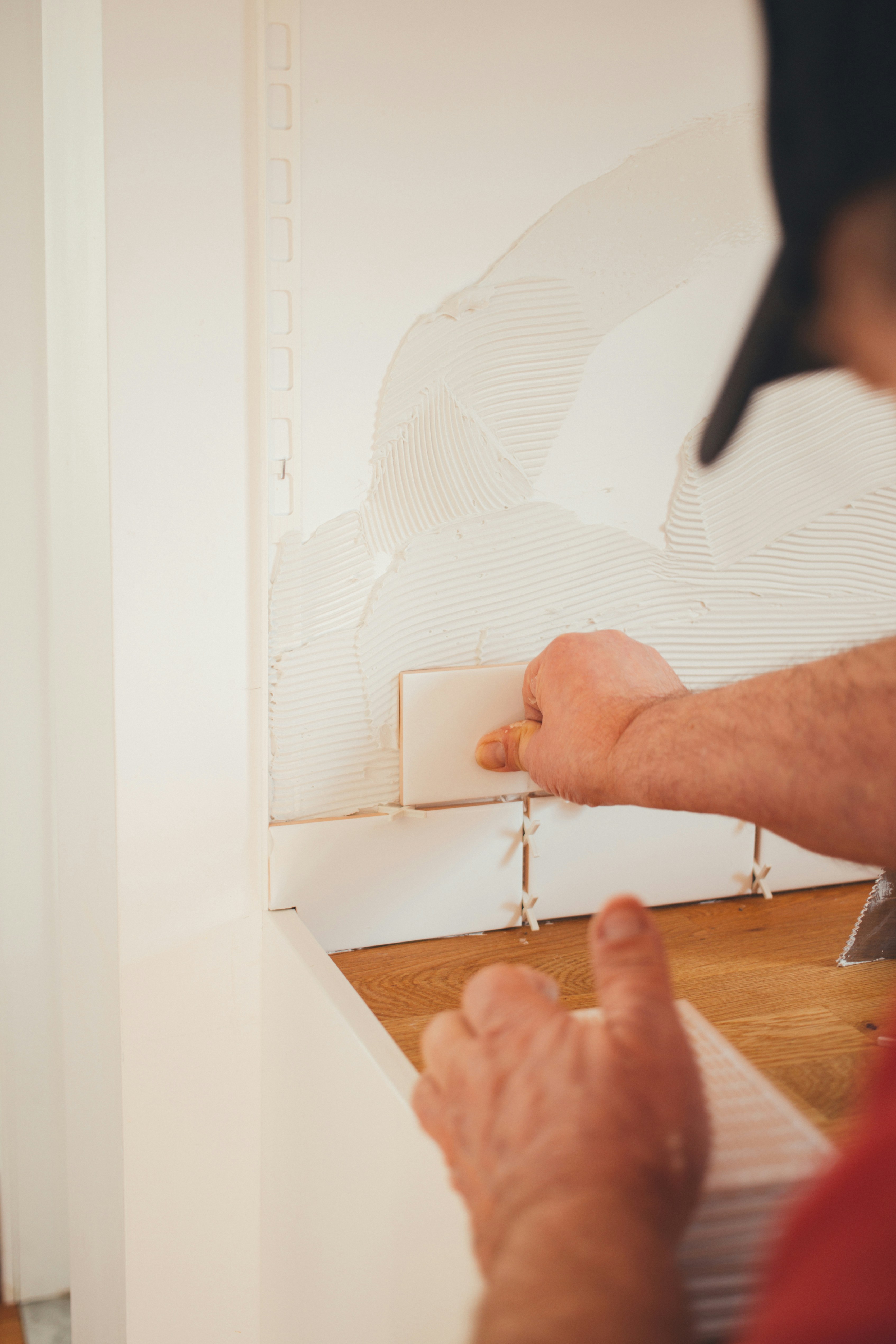
A tile being pressed into combed adhesive.
Written by Ivan Bodnar, an independent home renovation specialist in Melbourne with about 15 years of hands-on residential experience. It covers wall and floor tiles in bathrooms, kitchens and laundries. It’s a way to think the decision through, not a diagnosis. The right fix, cost and timeframe always depend on your property’s condition and the work it actually needs.
Lift the cracked tile, or the few around it, bed in new ones and regrout. It’s quick, it’s contained and the room looks right again. If the crack came from something simple, like a dropped bottle or a heavy knock, this can be all the job needs.
The catch: if something underneath caused the crack, a new tile sits on the same problem. You may also struggle to match the old tile exactly.
Before choosing a fix, find out why the tile cracked. Is it bonded properly? Is the floor or wall moving? Is there any sign of moisture? One of the most common renovation mistakes is focusing on the finished appearance without properly assessing what’s underneath.
Sometimes the check confirms a simple replacement is fine. Sometimes it shows a bigger job is needed. Either way, you’re deciding with the facts in front of you.
On a site visit, these are the things I look at before suggesting either answer. You can start on some of them yourself.
☐ ONE OR MANY?
A single cracked tile often points to an impact. A line of cracks running across several tiles is more likely to point to movement below.
☐ DOES IT SOUND HOLLOW?
If the tiles around the crack sound hollow when they’re tapped, they may not be fully bonded to the surface beneath.
☐ DOES ANYTHING FLEX?
A floor that gives slightly underfoot, or a wall that moves, needs looking at before any new tile goes down.
☐ ANY SIGN OF WATER?
Crumbling grout, staining, a musty smell or damp on the other side of the wall all suggest moisture is involved.
☐ CAN IT BE MATCHED?
Spare tiles from the original job make a repair much easier. Without them, it’s worth considering a wider area, or the whole room.
If the assessment points to a leaking pipe or other plumbing, that part of the job is done by a licensed plumber. I don’t do licensed plumbing or electrical work myself. When a renovation needs it, I work with appropriately licensed specialists. Regulated building work may also need suitably authorised specialists, and the permit, registration and insurance requirements have to be assessed.
I don’t provide a 24-hour emergency service. If water is actively leaking, contact a licensed plumber first. How I work with licensed specialists →
Neither answer is wrong. The surface answer suits a simple, isolated crack. The sound answer suits everything else. What matters is knowing which one you’re dealing with before you spend money on new tiles.
If you’d like a second pair of eyes, send me a message with your suburb, or text a few photos to 0413 142 055. The site visit and quote are free, and you’ll deal with me directly from start to finish. For the wider picture, see wall and floor tiling, bathroom renovations and how to send a useful renovation enquiry.
☐ A wide photo of the room
☐ A close-up of the crack
☐ Your suburb
☐ Spare tiles, if you have any