
Reference: square wall tiles with a light grout line
Home / Bathroom Guides / Bathroom Tiles
GUIDE — ELEVATION & FINISH SCHEDULE
Bathroom Tiles Guide
Tiles are the part of a bathroom you look at every day, but they’re chosen late, once the layout is fixed and the waterproofing is planned. In a compact St Kilda flat or terrace, the right tile can make the room feel wider, and the wrong one can make a wet floor dangerous. This guide covers five choices in the order they matter: material, slip resistance, format, finish, then grout and pattern.
SHEET A — MATERIAL
Porcelain, ceramic or stone?
All three can look good on the day they go up. They behave differently over years of steam, cleaning products and bare feet, so match the material to where it sits in the room.
A1
Porcelain
Porcelain is dense and absorbs very little water, so it’s the usual choice for shower floors and walls. It’s also made in large formats and stone-look or concrete-look surfaces. The trade-off is that it’s hard to cut, so tight corners and niches take more careful work.
— Best for: floors, shower walls, large formats
A2
Ceramic
Glazed ceramic is lighter and easier to cut. It comes in a huge range of colours and handmade-look glazes. It works well on walls, including feature walls behind a vanity. Most ceramic tiles are too soft or slippery for a wet floor, so check the rating before using one underfoot.
— Best for: walls, splashbacks, colour and glaze
A3
Natural stone
Marble, travertine and limestone give each tile its own variation, but they’re porous. They need sealing and gentle cleaners, and they can etch. Stone suits a luxury bathroom renovation where the owner accepts some upkeep in return for character.
— Best for: vanity walls, low-splash zones, premium finishes
SHEET B — UNDERFOOT & FORMAT
Safe floors, sensible sizes
Floor tiles need grip and a size that can slope to the waste. Wall tiles mostly need to look right and clean easily.
Slip resistance for wet floors
In Australia, floor tiles are sold with a slip-resistance classification, usually shown as a P rating. Ask for the rating before you fall for a sample. A polished tile that suits a hallway can be slippery in a shower. Choose a matt, textured or honed finish for shower floors and the main floor near the bath or shower.
Tile format and the fall to the waste
Large-format tiles have fewer grout lines and can make a narrow room feel calmer. But a big, rigid tile is hard to lay on a floor that has to fall towards a drain. Smaller tiles or mosaics follow the fall more easily inside a walk-in shower. A linear strip drain lets larger tiles slope in one direction. Many small bathrooms use large tiles on the walls and smaller ones on the shower floor.
Finish: gloss, matt or textured
Gloss wall tiles bounce light around a windowless room and wipe clean easily, but they show every uneven wall. Matt tiles hide water spots and look softer. Textured and three-dimensional tiles work best on one feature wall, away from the spray.
— General guidance only: suitability depends on the specific product and room.
SHEET C — GROUT & SETTING OUT
The lines between the tiles
Grout colour changes a tile more than most people expect. A matching grout makes the wall read as one surface, which helps small rooms. A contrasting dark grout makes the grid a feature and hides everyday marks on the floor. Pale grout on a shower floor shows staining sooner.
Common layout patterns
Stack bond — a straight grid. Clean and modern, but it needs straight walls.
Brick bond — offset rows. A classic look for subway tiles.
Vertical stack — tiles laid upright, which draws the eye up in a low room.
Herringbone — detailed and full of movement. It uses more cuts and more labour.
Setting out matters as much as pattern. Plan where the cuts land so thin slivers don’t end up at a niche, window or doorway.
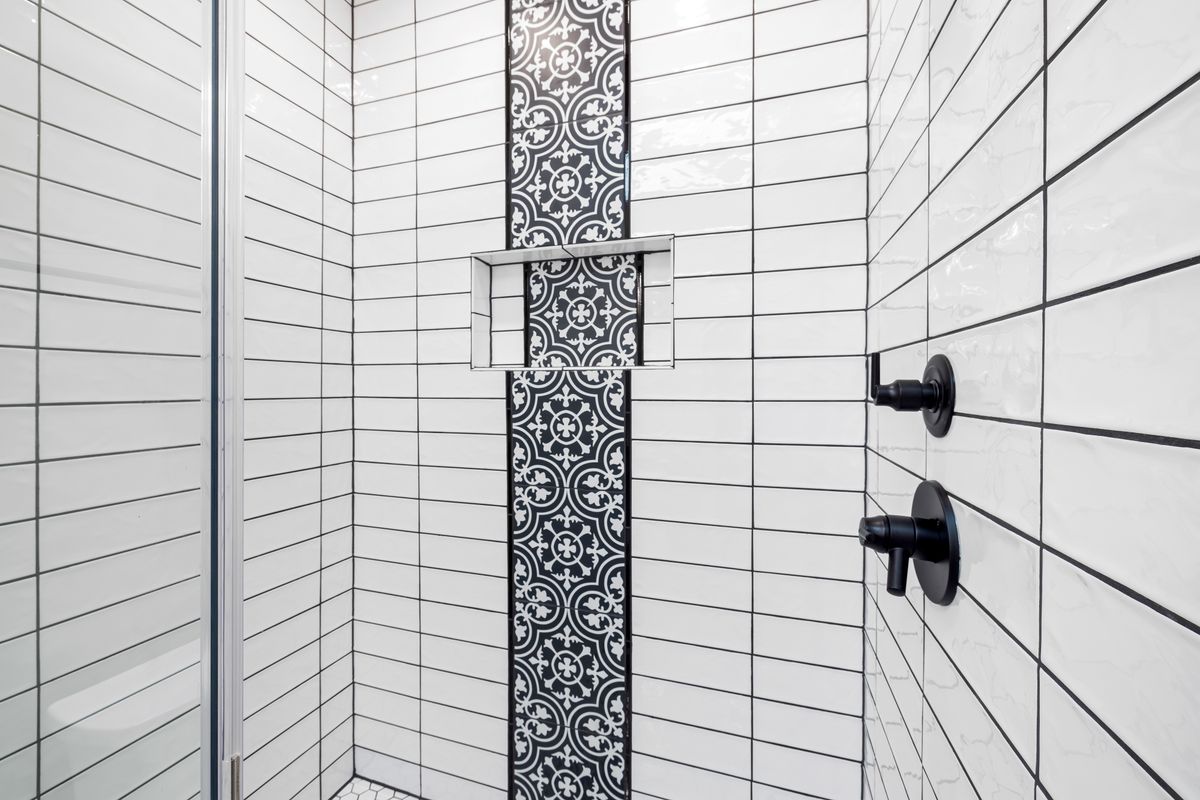
Reference: subway tile with contrasting dark grout and a patterned strip
SHEET D — BEFORE YOU CHOOSE
Take samples home, then plan the install
Look at tile samples in your own bathroom light, both morning and night, and place floor and wall samples side by side with the grout colour you’re considering. Tiles only perform as well as what’s beneath them, so read the Bathroom Waterproofing Guide too. If you’re planning a shower floor, the Walk-In Shower Guide covers falls and drains.
When you’re ready to build, see our Bathroom Tiling service for St Kilda and nearby suburbs. For stone and premium finishes, see Luxury Bathroom Renovations. You can also contact us with questions.